




Digital Marketing Is The Next Channel For The 21st Century
Marketing has undergone a profound transformation over the centuries, with each major leap closely aligned with the media technologies of the era. In the 19th century, businesses relied almost exclusively on printed media—newspapers, catalogs, and flyers—because the printing press was the most accessible and cost-effective mass communication tool. As society progressed into the 20th century, the marketing landscape was reshaped by the emergence of broadcast technologies. Radio introduced the power of audio persuasion, while television revolutionized marketing with its unique combination of visual storytelling and sound. This opened the door to immersive brand experiences that could build deeper emotional connections with audiences.
The 21st century ushered in an entirely new paradigm driven by digital technology. Unlike previous eras that emphasized mass appeal through broad messaging, modern marketing now focuses on targeted precision. The rise of the internet, mobile platforms, and data analytics enables businesses to reach more people than ever, but with unmatched specificity. The real revolution lies not just in reach, but in relevance—delivering tailored content to individuals based on their preferences, behaviors, and demographics. Digital tools make it possible to analyze real-time engagement, optimize campaigns instantly, and refine messaging with laser precision.
This highly personalized approach doesn’t just improve efficiency; it significantly boosts conversion rates by speaking directly to the needs and desires of each audience segment. Sprint Data Solutions Worldwide Marketing specializes in providing this level of data-driven targeting. With our powerful databases and multichannel campaign support, we help clients move beyond outdated “one-size-fits-all” advertising and into highly strategic, results-driven outreach. Whether through email, SMS, direct mail, or voice, we empower businesses to connect with the right people at the right time for maximum impact.
What Sprint Data Solutions Worldwide Marketing Is
Sprint Data Solutions Worldwide Marketing was founded on the entrepreneurial vision of a service-disabled veteran who, after serving the nation, committed to helping rebuild and grow the economy by empowering American businesses. Established during a transitional era—when digital technology was just on the horizon and traditional marketing like print, radio, and television still reigned supreme—the company initially focused on direct mail marketing. This proved to be a fortuitous entry point, as it provided foundational expertise in one of the most critical aspects of modern marketing: the collection, organization, and strategic use of consumer data.
Long before data analytics became a buzzword in the digital age, Sprint Data Solutions Worldwide Marketing was already applying these principles to direct mail campaigns. This early emphasis on precision targeting and measurable results naturally positioned the company to excel when digital marketing finally matured. As online platforms, social media, and email campaigns gained traction, Sprint Data Solutions was ready to pivot. With robust internal systems and a deep understanding of customer segmentation, the company quickly adapted, integrating digital solutions to provide comprehensive, cross-channel marketing services for its growing clientele.
By leveraging its early experience in data-driven strategies, Sprint Data Solutions Worldwide Marketing gained a strong competitive edge during the digital transformation. It became one of the few firms at the time that could seamlessly blend traditional direct marketing with emerging digital channels. Today, the company continues to stand out by delivering high-impact marketing solutions backed by decades of expertise and a commitment to innovation, helping clients achieve measurable success through both time-tested and cutting-edge strategies.
The Digital Marketing Difference
Digital marketing represents one of the most transformative developments in the history of promotional outreach. Unlike traditional advertising methods—such as print, radio, or television—digital marketing offers unparalleled precision, transparency, and accountability. Traditional campaigns can broadcast to massive audiences, but they leave marketers guessing about the real-world impact. For example, while Nielsen ratings might suggest a particular number of viewers during a commercial broadcast, there’s no definitive way to know exactly who saw the ad, whether it resonated, or how it influenced purchasing behavior. At best, marketers have had to rely on estimated exposure and infer results from spikes in business activity.
Digital marketing changes the game by turning every interaction into measurable data. Every click, view, share, and conversion is logged, giving marketers real-time insights into campaign performance. From email open rates and click-through statistics to conversion attribution and bounce rates, every part of the marketing funnel is now trackable with granular detail. This data-driven approach allows businesses to optimize campaigns with surgical precision, adjusting messaging, timing, and targeting based on live feedback and consumer behavior trends.
Take email marketing as a prime example. While direct mail campaigns offer tangible engagement, they lack real-time feedback and tracking. With digital email campaigns, businesses not only receive confirmation of delivery but can monitor who opened the email, how long they engaged with the content, which links were clicked, and what actions were taken afterward. Combined with tools like A/B testing and CRM integration, this allows for a dynamic feedback loop that drives more effective campaigns over time. With such in-depth analytics, companies can tailor their offerings to individual user preferences, geography, purchase history, and even device type, creating a hyper-personalized experience that simply isn’t possible through traditional media. Digital marketing doesn’t just reach an audience—it understands it, learns from it, and evolves with it.
Multi-Media
Another defining strength of digital marketing is its remarkable flexibility across multiple forms of media. Traditional marketing channels—like newspapers, radio, or television—are inherently restricted by the medium itself. Print lacks motion and audio. Radio lacks visuals. TV can’t offer real-time interaction. Digital marketing breaks these barriers entirely, offering a versatile, multimedia approach that seamlessly blends the best of all traditional formats into one integrated experience.
Email campaigns, for instance, are no longer restricted to plain text. They can feature rich visual layouts, animated graphics, embedded videos, interactive forms, and clickable calls-to-action—all tailored to the recipient’s behavior or preferences. Emails can redirect users to landing pages, surveys, promotions, or even AI-powered chat assistants, enabling two-way communication instantly. These enhancements make digital outreach more engaging and personalized than any single traditional channel ever could.
Digital marketing also extends far beyond email. With the rise of mobile connectivity and smart devices, marketers can now reach consumers wherever they are and whenever they’re active. Whether it’s push notifications through an app, SMS/text campaigns, mobile-friendly websites, or in-app advertisements, businesses have an expansive toolkit to deliver impactful, data-informed messages. And thanks to responsive design and cross-platform integration, these communications can adapt to different screens and devices without compromising user experience. Some of the most impactful digital marketing formats available today include:
Email Marketing
Email marketing stands out as one of the most adaptable and powerful tools in a marketer’s arsenal, offering key advantages that surpass many traditional methods like direct mail. One of its most valuable benefits is accessibility—recipients don’t have to be physically present at their mailbox to engage. Email campaigns can reach audiences no matter where they are, whether at home on a desktop, commuting with a tablet, or traveling with a smartphone in hand. This around-the-clock connectivity ensures your message is never out of reach and can be acted on in real time.
Modern email marketing also allows for highly dynamic content creation. Messages can range from minimalistic and information-focused to rich, visually driven experiences that include compelling graphics, embedded videos, GIFs, animations, and clickable buttons that guide users seamlessly to landing pages or product catalogs. This opens the door to immersive brand storytelling and stronger user engagement without overwhelming design or production costs.
Moreover, email marketing excels at automation and performance tracking. Marketers can integrate sophisticated CRM tools that personalize email content based on user behavior, purchase history, or engagement levels. For instance, customers who regularly purchase a particular product can be automatically sent reminders when stock is replenished, or when related items are on sale. This type of lifecycle marketing boosts retention by delivering timely, relevant offers tailored to individual needs.
Behavior-based automation also helps recover lost sales opportunities. If a customer abandons a cart, a follow-up email can be triggered within hours—perhaps with a discount or a reminder—nudging the prospect back to complete the purchase. Similarly, new subscribers can be sent welcome series emails, while loyal customers can receive exclusive early access to upcoming promotions or product launches.
Perhaps most importantly, email marketing provides precise, actionable data. Metrics like open rates, click-through rates, bounce rates, and conversions allow you to evaluate campaign performance in real time and optimize based on insights. You can conduct A/B testing to refine subject lines, visuals, or CTAs, and segment your audience to target by interest, geography, or demographics—all with minimal effort and cost.
Voice Broadcasting
Voice broadcasting, once limited to legacy methods such as radio ads and cold-call telemarketing, has been revitalized in today’s digital ecosystem. Modern voice broadcasting leverages automated phone systems and internet technologies to deliver pre-recorded voice messages to a wide audience, making it a cost-effective and highly scalable tool for customer outreach.
Its applications have expanded beyond traditional formats. Businesses now integrate voice messages into email marketing campaigns, push notifications, and even as interactive voice response (IVR) elements within customer support systems. Additionally, voice ads can now be played programmatically across streaming platforms, smart speakers, and social media apps. For industries where tone, inflection, and human emotion matter—like healthcare, political campaigns, and real estate—voice broadcasting delivers a personal touch that text simply can’t match. This makes it a compelling format for re-engagement, appointment reminders, event promotions, and more.
Text/SMS
Text messaging, commonly referred to as SMS (Short Message Service), has evolved from its humble origins as a basic mobile communication tool into a critical component of digital marketing strategies. Initially developed when mobile devices had limited functionality, SMS is now a powerful direct-to-consumer medium known for its immediacy and high engagement rates.
Unlike email, which may be overlooked or filtered into spam folders, SMS boasts open rates as high as 98%, with most messages read within minutes. This makes it ideal for time-sensitive offers, flash sales, booking confirmations, and customer support alerts. With the rise of smart automation, SMS campaigns can now be personalized, scheduled, and integrated into CRM systems to support full-funnel marketing. Enhanced with links, promo codes, and opt-in features, SMS bridges the gap between traditional outreach and mobile-first engagement, proving especially effective in retail, e-commerce, healthcare, and service industries.

How We Can Help
Sprint Data Solutions Worldwide Marketing has invested years into building and refining an expansive and diverse archive of high-quality contact databases. These repositories include millions of entries accumulated through strategic and compliant sourcing methods. In addition to proprietary collections, we maintain collaborative partnerships with established and trusted third-party data providers, allowing us to continuously broaden the scope and precision of our contact reach.
Every piece of data in our system is acquired through lawful and ethical practices. This includes opt-in participation via newsletter subscriptions, user-consented data sharing when registering for online services, voluntary survey completions, and direct submissions such as business card contributions at events. Our commitment to transparency and user consent ensures that all data complies with regional and global data protection laws, including GDPR and CCPA standards.
What sets our database apart is its dynamic nature. We do not treat our lists as static inventories. Instead, we view them as “living ecosystems” that demand regular upkeep and validation. Our data integrity process involves scheduled audits, de-duplication routines, and real-time updates to account for life events such as relocations, deceased recipients, and shifts in professional roles. This dedication to maintenance ensures that every marketing campaign launched through our platform is grounded in relevance, reducing the risk of misdirected communication and maximizing the return on investment for our clients.
Yet, having access to large volumes of data is only the beginning. Sprint Data Solutions integrates advanced artificial intelligence (AI) and machine learning (ML) systems to extract maximum value from this raw data. These intelligent systems analyze behavioral patterns, location demographics, psychographic trends, and transactional history to categorize and prioritize contacts based on client-specific needs. Our AI-driven segmentation tools go far beyond geographic or age-based sorting—they create multidimensional profiles that align with our clients’ ideal customer personas.
This results in highly targeted data sets that drastically improve engagement metrics. Clients receive contact lists that are not just comprehensive, but contextually relevant—refined to increase the chances of meaningful interaction, qualified leads, and ultimately, successful conversions. At Sprint Data Solutions, we don’t just provide data—we deliver precision marketing fuel.
A pivotal strength of Sprint Data Solutions Worldwide Marketing lies in the geographic flexibility and customization available in our contact databases. We understand that different marketing campaigns demand varying levels of geographical focus, and our system is built to accommodate this with precision.
For campaigns with broad scope, we provide comprehensive nationwide data coverage, enabling outreach to potential customers across all 50 states and U.S. territories. This is ideal for product launches, national brand campaigns, or services with widespread appeal. However, not all clients require this extensive reach. Our geographic targeting can seamlessly narrow down to regional areas, such as the Northeastern U.S. or the Pacific Northwest, based on your marketing strategy.
Even more refined targeting is possible. State-level segmentation is available for localized campaigns—for instance, focusing exclusively on California, Florida, or Massachusetts. We further support hyperlocal initiatives, such as zeroing in on a single city or town, like Boston, MA or Austin, TX. For clients seeking laser-focused outreach, our data can pinpoint specific neighborhoods or zip codes, such as targeting only residents in Beacon Hill, Boston or Tribeca, New York City. This granularity empowers marketers to connect with their audience where it matters most—on the ground, in their own communities.
Beyond geographic targeting, our data capabilities extend into robust demographic and psychographic profiling. By leveraging advanced data analytics and machine learning models, we can prioritize and filter contact records based on a wide spectrum of consumer characteristics. Ethnic targeting, for example, allows marketers to align with cultural preferences and nuances—reaching African-American, Hispanic, Asian-American, or Native American communities with culturally relevant messaging.
An Array Of Services
Sprint Data Solutions Worldwide Marketing transforms its comprehensive contact databases into high-impact results by offering an extensive suite of digital marketing services. These services are designed to leverage data-driven insights and align with client goals, ensuring optimized outreach, engagement, and conversion across multiple platforms.
Our team understands that simply having data is not enough—it’s how that data is strategically activated that makes the difference. That’s why we offer a diverse array of digital marketing solutions, including:
Email Broadcasts
Email broadcasting remains one of the most efficient and scalable forms of digital marketing, despite its simplicity. This method involves sending a single message to a broad list of recipients, ideal for promoting products, announcing limited-time sales, launching services, or driving traffic to a website. What sets successful campaigns apart is the level of targeting and personalization that goes into them.
Sprint Data Solutions Worldwide Marketing uses data-driven targeting to ensure email broadcasts reach recipients who are most likely to engage. With refined segmentation based on interests, behaviors, and demographics, broadcasts are customized for relevance—reducing the likelihood of emails being flagged as spam and increasing open and click-through rates. Features like dynamic content, personalized subject lines, and scheduling tools allow for optimized timing and message resonance, boosting ROI and customer engagement significantly.
Email Newsletter Broadcasting
Email newsletter broadcasting offers a more immersive and relationship-driven approach to digital outreach. Unlike traditional email blasts that focus on promotional urgency, newsletters provide a platform for sustained engagement, education, and brand storytelling. These messages are typically periodic—weekly, bi-weekly, or monthly—and designed to deliver consistent value to subscribers.
Newsletters go beyond pure marketing by incorporating curated content that informs, entertains, or inspires the reader. This might include how-to guides, industry news, behind-the-scenes insights, or customer success stories. For example, an auto detailing business can combine product announcements with articles on DIY techniques or seasonal maintenance tips. Similarly, a wellness brand may supplement product promotions with health advice, meditation practices, or invitations to online events and expert webinars.
The dual benefit of newsletter broadcasting lies in its ability to simultaneously promote and build trust. When recipients anticipate and appreciate your emails, they’re more likely to remain engaged, click through, and ultimately convert—making newsletters a vital long-term strategy for brand growth and customer retention.
SMS Text Messaging Campaigns
In today’s mobile-first world, smartphones have become the primary touchpoint for daily digital interactions. Their convenience, portability, and constant connectivity mean that most people are far more likely to check their phones in real-time compared to logging into a computer. As a result, SMS/Text messaging stands out as one of the most immediate and impactful communication channels available to marketers.
Unlike traditional methods like physical mail—which can be delayed—or email, which often gets lost in crowded inboxes or filtered into spam folders, text messages are typically read within minutes of being received. Statistics show that SMS boasts open rates of over 90%, making it one of the most effective tools for timely alerts, flash promotions, appointment reminders, and limited-time offers.
However, successful SMS marketing requires a strategic approach. Due to strict character limits (usually 160 characters per message), marketers must craft concise, compelling, and action-oriented copy. There is little room for fluff—every word counts. A well-executed SMS campaign communicates value instantly and includes clear calls to action, often supported by shortened URLs, promo codes, or opt-in confirmations.
Beyond simplicity, SMS/Text messaging bypasses many of the common obstacles found in other outreach formats. There’s no need to navigate spam filters, no reliance on internet access or browser compatibility, and no requirement for the recipient to be in front of a screen. It’s direct, personal, and typically welcomed—especially when permission-based and relevant.
Voice Broadcasting Campaigns
Digital marketing has revitalized traditional audio-based promotion by enabling automated voice broadcasting—an evolution of the classic radio ad or voicemail message. This technique blends the familiarity of spoken communication with the efficiency of modern automation, making it an ideal tool for scalable outreach without the overhead of manual telemarketing.
Much like SMS marketing, the most effective voice broadcasts are brief, clear, and action-oriented. Today’s consumers typically have limited attention spans and little patience for long or meandering messages. To maximize engagement, successful voice campaigns are carefully scripted to deliver the core message—whether it’s an event announcement, limited-time offer, political message, or appointment reminder—within a concise 30 to 60 seconds. The tone, pacing, and clarity of delivery all contribute to how well the message is received.
Ringless Voice Broadcasting Campaigns
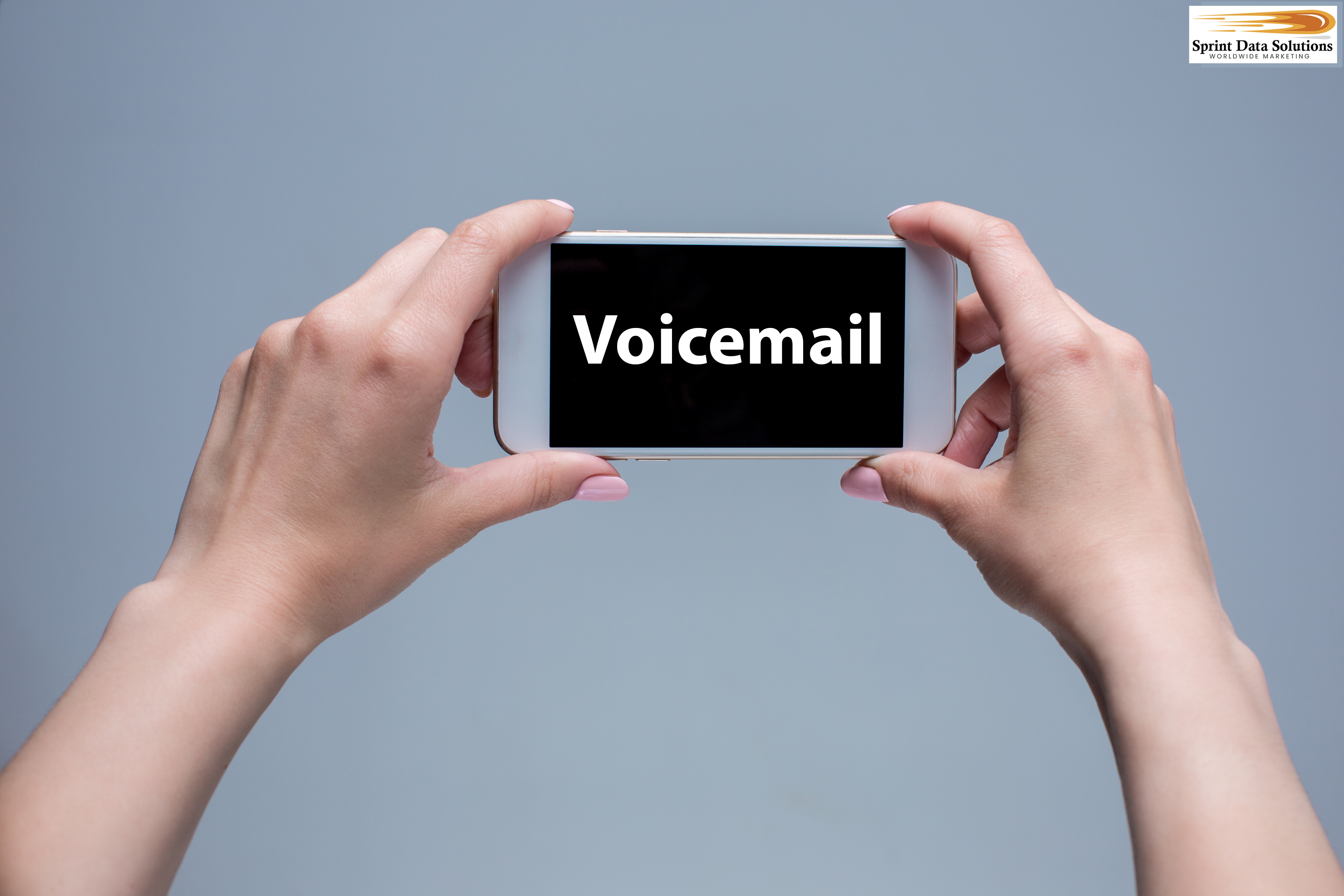
Ringless voice broadcasting is a modern evolution of traditional voice campaigns, maintaining the same ease of use and impactful audio delivery, but with one distinct difference—it bypasses the ringing phase entirely. Instead of initiating a disruptive phone call, the message is silently delivered straight to a recipient’s voicemail inbox or answering service, offering a non-intrusive yet personal approach to outreach.
This innovative technique preserves the warmth and familiarity of a human voice—ideal for conveying sincerity, urgency, or emotional appeal—but eliminates the resistance often associated with live calls or ringing phones. Since recipients can listen at their convenience, engagement often increases due to the reduced interruption and greater sense of control on the consumer’s end.
From a strategic standpoint, ringless voicemail campaigns offer powerful digital marketing advantages. They allow for mass delivery without the need for a live call center, reducing overhead and ensuring consistency in message delivery. Just like email or SMS campaigns, ringless broadcasts can be personalized with localized content, names, or call-to-actions.
Email Turnkey Campaigns
For businesses seeking a streamlined, expertly guided path into digital outreach, Sprint Data Solutions Worldwide Marketing offers comprehensive turnkey email campaign services. This specialized offering is designed for organizations that recognize the potential of email marketing but may lack the in-house experience or resources to execute a campaign from start to finish.
Our turnkey solution takes the guesswork out of the process by managing every phase of the campaign lifecycle under one roof. It begins with the strategy and conceptualization stage, where our team collaborates with clients to clarify goals, define target audiences, and craft compelling messaging themes. From there, we handle professional copywriting to create persuasive, brand-aligned content that drives action.
To further enhance visual appeal and engagement, we incorporate custom graphic design, tailored to align with the client’s brand identity and campaign goals. Whether it’s eye-catching banners, product showcases, or call-to-action buttons, every design element is optimized for conversion and responsiveness across devices.
Once creative assets are approved, we leverage our extensive, ethically sourced databases to identify and secure the most relevant and responsive contacts based on industry, geography, behavior, or demographic criteria. The final step is seamless execution—emails are deployed through trusted platforms with tracking mechanisms in place to monitor open rates, click-throughs, and overall campaign performance.
If you’re ready to reach new customers and grow your business through expertly crafted digital marketing, we’re here to help. Contact Sprint Data Solutions Worldwide Marketing today—your next successful campaign starts here.